


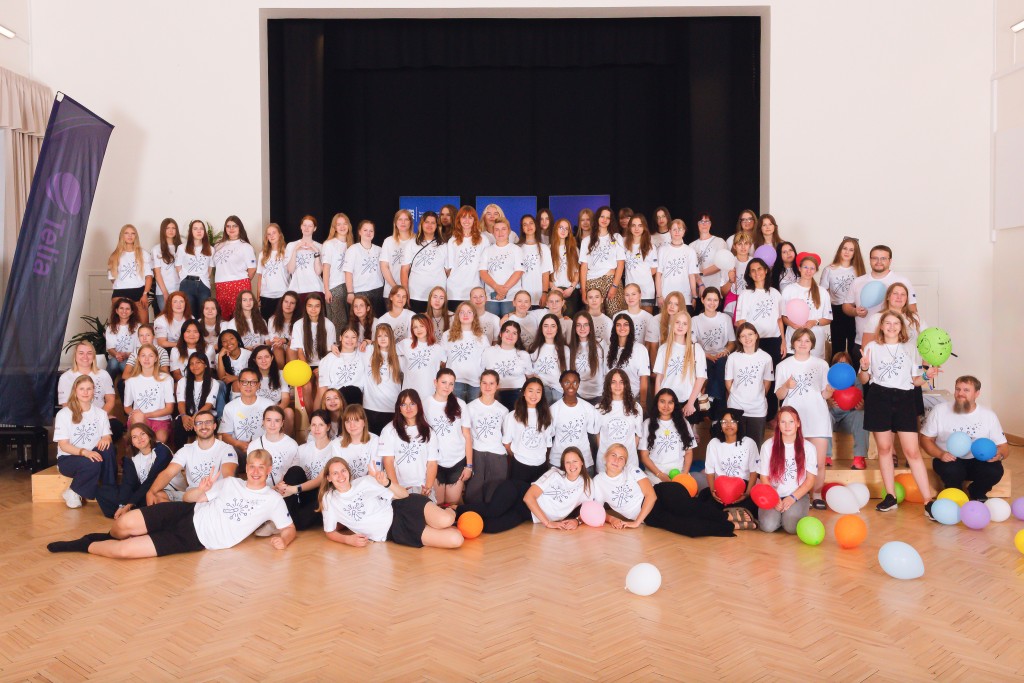
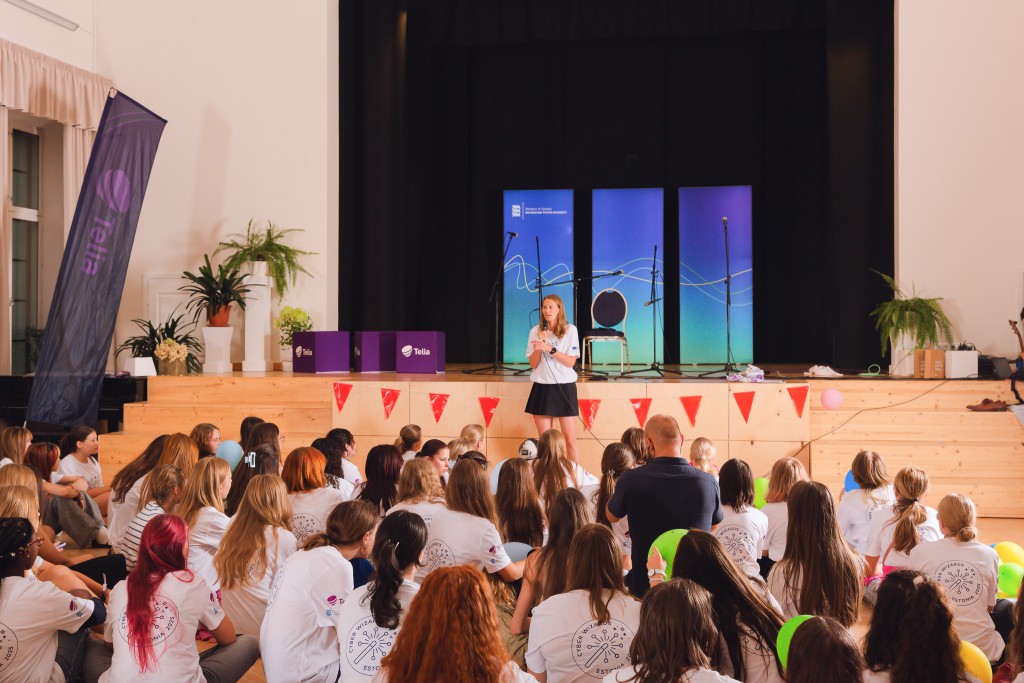
According to Tiina Pau, Expert-Coordinator at RIA and the lead organiser of the camp, the goal was to offer girls aged 13–16 an opportunity to dive into a field where women have so far been underrepresented. ‘There are very few places where young girls can develop their cybersecurity or IT skills. We are clearly filling a gap in the market,’ said Pau.

The camp programme involved a combination of technical knowledge and skills, as well as teamwork exercises. The participants had the chance to try hacking Wi-Fi and Bluetooth, learn how to navigate the Linux environment, explore the workings of a security operations centre, reflect on topics such as fake news and social media algorithms, and much more. Excitement was sparked by the custom-built escape room designed specifically for the camp, where participants had to literally hack their way out using codes, USB flash drives, and logic puzzles.
The highlight of the week was the CTF (Capture the Flag) competition, where participants got to put their cybersecurity knowledge to the test. ‘The key to success was teamwork – the groups that communicated better and supported each other also made faster progress in solving the challenges,’ said Pau.

CyberWizards was not just about developing technical skills. The camp also serves as a meeting place for different cultures, where young people are mixed into international groups and are thereby able to learn from each other. The evenings were filled with group games, entertainment, cultural exchanges, as well as cooking.
The feedback on the camp was very positive from both the young participants and the instructors. ‘Some of the girls were already asking during the first few days how they could participate again next year and how they could further develop what they had learned in their home countries,’ said Pau. ‘Several girls also expressed a desire to pursue a career in cybersecurity or IT.’
The camp was free of charge for participants. The event was co-funded by the European Union and the European Cybersecurity Competence Centre, Telia, as well as the international cooperation networks that helped participants travel to Estonia.


