
Russian full-scale invasion of Ukraine is accompanied by the activity of pro-Kremlin hacker groups that are also targeting countries which support Ukraine. In Estonia, this has mostly manifested as DDoS attacks against online services of the public sector as well as those of the financial, transportation, and media sectors.
September broke records as the Information System Authority registered 84 DDoS attacks – more than in the entire year of 2021. ‘Compared to the past, ideological attacks have become much more targeted so we have also seen a rise in the number of incidents with an impact,’ wrote Deputy Director-General of the Information System Authority Gert Auväärt in the cyber security yearbook published today.
Due to security measures, the impact of DDoS attacks has mostly been minor – the work of a website or a service has been disrupted briefly or been slower than usual. One of the more serious incidents took place in September when the sale of train tickets was halted for nearly 24 hours.
Russian aggression has also included numerous cyber-attacks against the Ukrainian infrastructure. In the light of lessons learned there, the Information System Authority has started to contribute more to the cyber security of companies and organisations providing vital services over the last few years – among all else, by identifying vulnerabilities through security tests, training staff in cyber threats, and through exercises in handling cyber-attacks.
‘An attack against equipment for industrial automation manufactured in Israel, disrupting the work of Estonian boiler houses and pump stations in November and December, was a painful reminder that you can be hit by the effects of a conflict that takes place thousands of kilometres away,’ said Auväärt.
‘Almost the entire critical infrastructure of Estonia is linked to information systems and their protection from cyber-attacks is of national importance. Cyber sector is an important part of the defence of civil infrastructure and I am happy to state that cyber security has once again become a priority in the state budget after many years,’ stated the Deputy Director-General of the Information System Authority.
Tiit Riisalo, the Minister of Economic Affairs and Information Technology, emphasised that cyber risks have become business risks for companies. ‘Economy is increasingly digitalised and production automated, meaning greater vulnerability to cyber-attacks. To achieve the objectives in the main area of activity and maintain the functionality of services, companies must increasingly invest in cyber security and risk mitigation,’ said Riisalo. According to him, cyber security must keep up with the development of technology and the current situation, so ensuring the necessary funding is a priority for the government.
In addition to politically motivated attacks, Estonia must also combat regular cyber-crime that is becoming smarter and more intense. Ransomware attacks disrupted the work of several large manufacturing companies with hundreds of employees. The number of scams affecting both private persons and companies grew by an astounding two and a half times in a year – the Information System Authority recorded 546 incidents. According to the Police, Estonians lost over eight million euros to scammers within twelve months.
‘Although statistical data indicates that cyber awareness among Estonians has been growing over the years, many schemes that are used to deceive us in cyber space are becoming increasingly sophisticated. The Information System Authority cannot ensure cyber space security on its own. However, we can do it together,’ stated Auväärt.
The Information System Authority cooperates actively with the Police and the banks to block scam and phishing pages and publishes regular warnings and overviews of cyber threats. Last year, the Authority also organised two large prevention campaigns to increase the cyber resilience of Estonian people and companies and created a free cyber security learning environment called Cyber Test for organisations and companies to improve the cyber knowledge of their employees.
‘Support offered by the Information System Authority is not limited to advice and knowledge. Last year, we started to provide grants for mapping and removing cyber threats to small and medium-sized companies and began to fund the creation of smart new cyber security solutions,’ explained Auväärt.
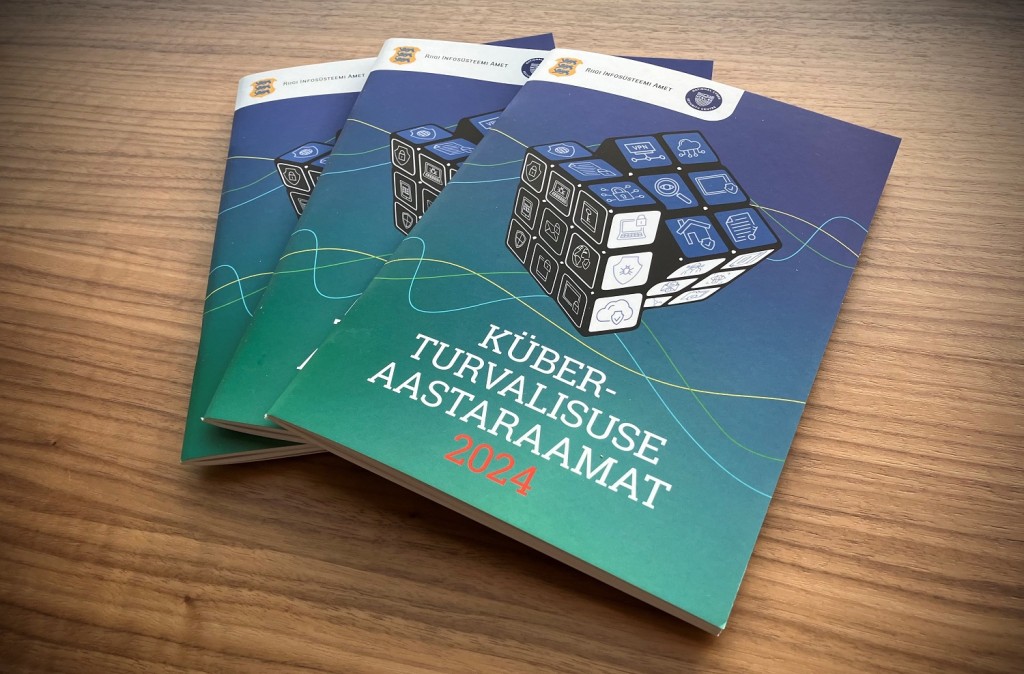
In addition to the above, the brand new cyber security yearbook describes two other serious cyber-attacks against the Estonian healthcare system, a wave of serious vulnerabilities, events in the international cyberspace, and more.

